Table Of Content
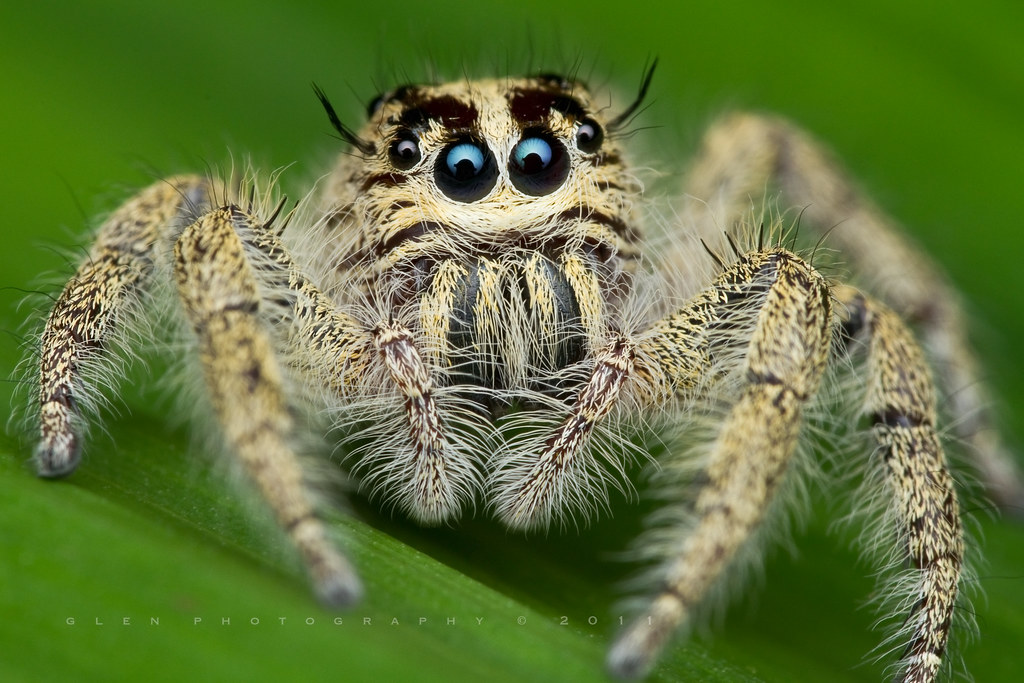
Determining how the hundreds, sometimes thousands, of arachnid "ears" work together to give a big relevant picture is next on the research team's list. Instead of one peak response to a single frequency, "these hairs operate at the physical limits of sensitivity across a much broader range of frequencies," Bathellier said. Researchers in the past thought each hair acted like those found in the cochlea of the human inner ear. In that organ, a forest of different lengths and thicknesses of hair breaks up incoming sound waves into discrete chunks, rather than picking up a wide range. Hunting spiders can not only watch your every move, but they can feel those moves, and that of their prey, through the air.

USA Spider Identification Tool
Schaber expected that all the hairs would point in the same direction, more or less. The cephalothorax, or prosoma, contains the brain, central nervous system, mouth, eyes, esophagus, part of the digestive system, and venom glands. It’s a fusion of the head and thorax and is protected by hard “shells” on the top (carapace) and the underside (sternum), which are made of protein and chitin.
Frontiers Science Communications
Just how do spiders walk straight up—and even upside-down across—so many different types of surfaces? Now, a new study in Frontiers in Mechanical Engineering is the first to show that the characteristics of the hair-like structures that form the adhesive feet of one species—the wandering spider Cupiennius salei—are more variable than previously thought. The team believes that this variety may be key to how spiders can climb so many surface types. The feet of this species of spider are made up of close to 2,400 tiny hairs (one hundredth of one millimeter thick).
Spider hair-inspired sensors could give drones a "spidey-sense" - New Atlas
Spider hair-inspired sensors could give drones a "spidey-sense".
Posted: Tue, 21 May 2019 07:00:00 GMT [source]
How to spin synthetic spider silk
Tactile hairs all have a so-called tubular body in their dendritic ends indicating their mechanoreceptive function. The primary afferent fibers into the central nervous system show a somatotopic organization in the longitudinal tracts of the subesophageal ganglionic mass. There are also projections into the brain proper, the supraesophageal central nervous system (Figure 3). Just how do spiders walk straight up -- and even upside-down across -- so many different types of surfaces? Answering this question could open up new opportunities for creating powerful, yet reversible, bioinspired adhesives. Scientists have been working to better understand spider feet for the past several decades.
USA Hair ™ = Exceptional Service and Unbeatable Advantages
The foregut and a bundle of nerve fibers from the brain pass through it. The pedicel is flexible, which allows the abdomen to move in all directions as spiders make their webs. It uses two fang-tipped appendages, called chelicerae, which have finely serrated inner edges, to catch and hold prey while venom is injected into it. Venom (only spiders in the small family Uloboridae lack it) is a mixture of chemicals produced by the venom gland.

thoughts on “Spiders Use Microscopic Hairs on their Feet to Climb Surfaces”
It is not possible to upload .zip files or more than one picture per upload. If you have more than one picture of your spider sighting, please upload them separately and copy the description text including the location along with it. It is easiest for others or for us to identify your spider if the photograph is taken from the top of the spider.
If you see this, it must be fall: Black and yellow Garden Spiders
Urticating hairs protect tarantula egg sacs (Avicularia spp. and Theraphosa blondi, respectively). This is thought to discourage fly larvae from consuming their eggs and young. Many cacti of the sub-family Opuntioideae feature fine, loosely attached short spines called glochids. When the plant is disturbed many of these spines fall off and penetrate the skin, causing irritation.
View honest customers reviews unboxing USA Hair extensions! View all videos
Spiders have developed several different respiratory anatomies, based either on book lungs or on tracheae. Mesothele and mygalomorph spiders have two pairs of book lungs filled with haemolymph, where openings on the ventral surface of the abdomen allow air to enter and oxygen to diffuse in and carbon dioxide to diffuse out. This system has most likely evolved in small ancestors to help resist desiccation.
"When we started the experiments, we expected to find a specific angle of best adhesion and similar adhesive properties for all of the individual attachment hairs," says the group leader of the study, Dr Clemens Schaber of the University of Kiel in Germany. "But surprisingly, the adhesion forces largely differed between the individual hairs, e.g. one hair adhered best at a low angle with the substrate while the other one performed best close to perpendicular." This current work studied only a small number of the thousands of hairs on each foot, and it’s beyond the scope of existing resources to consider studying them all. Some of these hairs act as sensory organs, helping tarantulas smell, taste, touch and detect vibrations from the world around them. These sensory hairs are found mainly on the spiders' legs and mouthparts and feed into sensory nerves located in the spider's "skin" or cuticle..
These hairs help guide tarantulas in capturing or responding to escaping prey. In 1883, German zoologist Friedrich Dahl named these "hearing hairs" when he observed that they moved to the sound of a violin. At the end of a spider’s leg, coarse fibers splinter into smaller hairs.
American tarantulas use the barbed irritant hairs (urticating hairs) on the abdomen to protect themselves against predators like lizards and mammals. When threatened, these spiders brush their back legs rapidly across the back of the abdomen. This sends clouds of loosely attached barbed hairs into the eyes, nose or mouth of the predator chasing them. The spider escapes while its pursuer is distracted by the highly irritant hairs.
Their physics-focused work suggests each hair acts like a single, independent ear – not a network of ear parts that, together, turn a spider's exoskeleton into one giant ear, as was previously assumed. Slit organs are also somehow involved in the spider's ability to 'memorise' directions, for example, the return route to its burrow after a hunting trip. Another stimulus to which spiders are incredibly sensitive is vibration. Vibrations transmitted through air, substrate surfaces and even water can be sensed by spiders.
Immense Selection of Hair ExtensionsSome say that quality doesn’t go hand in hand with quantity. At the USA Hair™ store, you will find not only the largest selection of hair extensions, toppers, wigs, and accessories, but you can also rest assured that every product at our store is of the highest quality possible. Browse through hair extensions, toppers, and wigs for any occasion and style. From clip-in extensions to full-coverage toppers, USA Hair™ has got you covered.
All of these hairs represent first-order lever arms, whose deflection triggers nervous impulses in the sensory cells ending at their base. They respond to the frictional forces contained in the slightest movement of air. The large majority of the hairs, however, are much less sensitive.
These dense networks of bristles are called scopulae and also help with capturing prey. Unlike mammal hair, which is made of keratin, tarantulas' hairs, called setae, are made of chitin, a derivative of glucose that also makes up the structure of a spider's exoskeleton. Before this latest research, Schaber knew the hairs were important for adhesion. He and his colleagues chose to study this in Cupiennius salei spiders. Often called tiger wandering spiders, they live in South and Central America.
The uric acid combines with solid waste in a pouch, called the stercoral pocket, located in the hindgut, then moves out through the anus. Look around on a spider’s web, and you’ll see small white or colored spots–spider poo. Pedipalps are two segmented appendages at the front of the prosoma. They’re located between the chelicerae and the first pair of legs and are usually shorter than the legs (although they can be easily mistake for them). You can often identify an adult male because he’ll have bulbous tips on his pedipalps. The hairs responded best to sounds between about 40 Hz, a low rumble of bass, and 600 Hz, a car horn (humans ears can detect between 20 Hz and 20,000 Hz).

No comments:
Post a Comment